
Zao’s Story
Zao first began in a living room in Milwaukee, WI. The weekly gathering was a mix of scripture, reflection, teaching, and discussion. The community grew through that weekly gathering plus monthly game nights, justice efforts, and discipleship relationships. In this way, our current Harbor model truly brings us back to our roots and to where this all began!
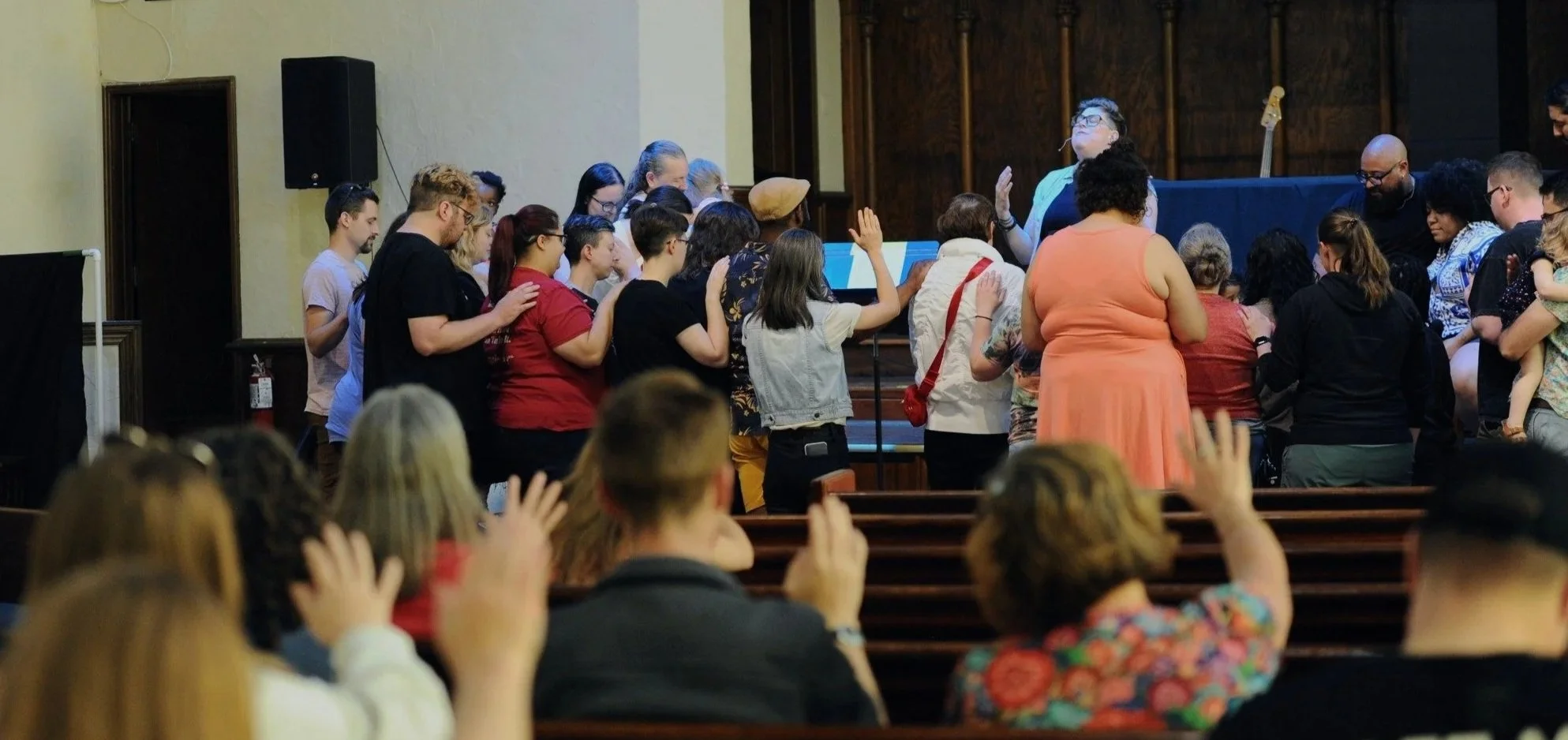
After those early days, Zao followed the path laid out for most church-starts: grow toward a traditional Sunday morning worship service in a church building, and bring as many people as you can. This model served us well for many years - from the living room, to a theater, and in 2019 to a big, beautiful, historic church building. For 7 years we gathered in this traditional way, bringing as many people as we could into connection at this central location for worship, community efforts, and justice work.
But our commitment to the Spirit has always led us to take risks toward greater faithfulness, and especially towards solidarity with the vulnerable and marginalized. After witnessing an exponential increase in threats to the safety of many in our community, including trans and queer folks and immigrants, our leadership began a discernment process about how to respond. Looking to the examples of radical church communities over the centuries, our Vision Team and pastors noticed that in times of political threat, the faithful have built powerful, decentralized, highly relational networks of resistance and care rooted in the love of God and neighbor. To fulfill our responsibility right now to protect each other, and to become as accessible as possible to those who are particularly in need of connection and safety in this moment, we needed a new way to be Zao.
This move to digital forward, highly accessible community online, paired with the deep relationality and commitment of the living room Harbor model is the path we discerned. It allows us to be church anywhere, protecting those who are most vulnerable by bringing them into community from the safety of their homes and others. It also allows us to challenge some of the norms of church consumption culture. Now, rather than simply attending church on Sunday mornings, each member is deeply involved in building the relational networks of the church itself, engaging in discipleship through relationship and worship, and embodying the church in our communities, neighborhoods, and digital practices. In this way "the church" isn't a building anymore, even in our imaginations. It's us.